Chapter 13 of The Modern Pioneer Cookbook Curriculum invites students into the delightful world of “Sweets and Treats,” where home baking becomes a joyful tradition while maintaining the principles of traditional foods. In this chapter, students of all ages explore how desserts can fit into a traditional foods kitchen by using whole ingredients, reducing excess sugar, and preparing baked goods from scratch.
Using Whole Grain Cowboy Cookies and other recipes, the chapter’s lessons blend practical kitchen skills with thoughtful discussions about real food, self-sufficiency, and wise choices. Best of all, these recipes prove that wholesome ingredients and balanced sweetness can still create memorable and tasty treats. (This lesson experience includes four free activity downloads!)
Thanks for Your Support: This curriculum material is offered free for families, homeschoolers, co-ops, teachers, grandparents, and lifelong learners. If this resource helps your family and you would like to support the creation of future Mary’s Nest curriculum materials, consider becoming a Sweet Friend Supporter on Patreon.
Affiliates note: As an Amazon Associate I earn from qualifying purchases. My content may contain affiliate links to products and services. If you click through and make a purchase, I’ll receive a small commission. It does not affect the price you pay.
Table of Contents
- About The Modern Pioneer Cookbook Curriculum Lesson Experience Series
- Getting Started with Sweets and Treats
- Discussion: Baking
- K-4 Activity: Moderating Sugar
- 5-8 Activity: Sweeteners Chart
- 9-12 Activity: Maximize the Nutrition of Desserts
- Recipe: Whole Grain Cowboy Cookies
- Tasting the Recipe
- Final Thoughts
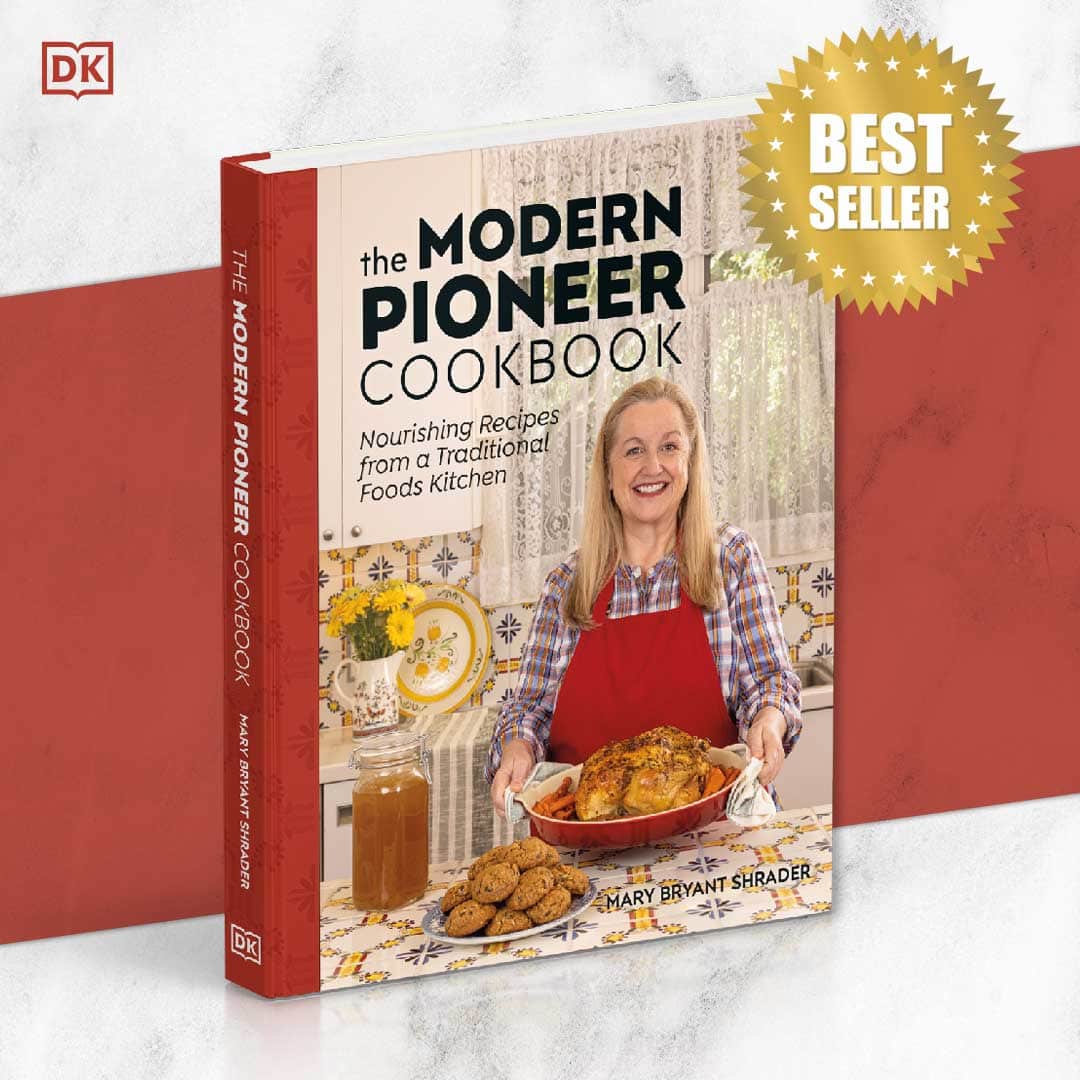
- The Modern Pioneer Cookbook
About The Modern Pioneer Cookbook Curriculum Lesson Experience Series
Hi! My name is Jamie O’Hara, and I’m a homeschooling mom, curriculum writer, and former classroom teacher. I recently had the pleasure of helping Mary Bryant Shrader create The Modern Pioneer Cookbook Curriculum, which includes extensive lesson plans for grades K-12 to complement Mary’s bestselling book, The Modern Pioneer Cookbook.
- Get The Modern Pioneer Cookbook Curriculum (Free and over 250 pages!)
- Get The Modern Pioneer Cookbook
- Read The Modern Pioneer Cookbook Curriculum Lesson Experience Article Series
Now, I’m excited to embark on a journey of experiencing these lessons with my own children, ages 6 and 8 (and sometimes my 3-year-old, too). I’ll be facilitating a total of 14 lessons, one for each chapter in The Modern Pioneer Cookbook Curriculum. As we go through the curriculum, I’ll document our experience to share with all of you!

Getting Started with Sweets and Treats
Chapter 13 of The Modern Pioneer Cookbook may be your students’ favorite because it’s all about “Sweets and Treats”! The table below summarizes the recipes, principles, and learning objectives for each lesson.
| Grade Band | Recipe | Traditional Kitchen Principles | Learning Goals (Students will…) |
| K-4 | Whole Grain Cowboy Cookies | 1. Homemade food 2. Low-waste kitchens | ● Discuss the role of baking in a homemade kitchen ● Decide how to moderate sweets and treats ● Prepare whole-grain cookies, following a recipe |
| 5-8 | Old-Fashioned Cinnamon Graham Crackers | 3. Real, whole foods 4. Seasonal eating | ● Discuss why home baking is important in a kitchen that uses real, whole foods ● Distinguish between whole and refined sweeteners ● Prepare graham crackers, following a recipe |
| 9-12 | Maple Sugar Apple Pandowdy | 5. Maximizing nutritional value 6. Preservation for self-sufficiency | ● Discuss how home baking supports the goal of self-sufficiency ● List ways to maximize the nutritional value of homemade desserts ● Prepare apple pie, following a recipe |
None of the recipes in this chapter require special equipment or hard-to-find ingredients. A food processor is handy for the Apple Pandowdy recipe, but it’s not necessary. You will need a rolling pin for both the Old-Fashioned Cinnamon Graham Crackers and the Maple Sugar Apple Pandowdy. The K-4 cookie recipe is probably the simplest, followed by the 5-8 and then the 9-12 recipe.
It’s worth noting that the recipes in Chapter 13 use a reduced amount of sugar, but they don’t taste like bland “health food” at all! As Mary explains in her introduction to this chapter in The Modern Pioneer Cookbook:
“Although we want to enjoy [sweets and treats] in moderation, the good news is that most of the desserts [in Chapter 13] are made with whole sweeteners, as opposed to white sugar. And for most of the recipes, I cut back on the traditional amount of sugar—any sugar—used to make these recipes. The extra sugar is not needed, thanks to the whole grain flours I use. These flours improve the nutritional profile and lend a certain sweetness to the dough. But don’t worry. Just because I cut back on the sugar and use whole grain flour doesn’t mean that these baked goods are lacking in flavor. You’ll find each recipe to be a tasty treat that all will enjoy.”

Planning for Students of Different Ages
Students of different ages can work together on any or all of the Chapter 13 recipes.
Older students can participate in the K-4 discussion and activity, but it may be a bit basic for them. You can differentiate for older students by incorporating some of the multidisciplinary extensions at the end of the lesson plans.
Similarly, younger students can participate in the 5-8 and 9-12 discussions, but they may need a bit of extra support or explanation. The middle school activity requires students to compare several types of sweeteners, many of which may be new to kids. It may be a bit too involved for young elementary students, but you can simplify the process. The same goes for the high school activity.
The K-4 and 5-8 activities require some writing, and the 9-12 activity allows students to choose their own project format (writing, drawing, or digital content creation) based on their interests.
As always, you’ll want to preview each lesson beforehand to plan for each unique student.

Discussion: Baking
We started our discussion by listing our favorite baked goods, including cookies, cakes, muffins, pies, and breads. I asked my children to think back to when they baked the Oregon Trail Pioneer Bread from Chapter 6, and we reviewed the definition of “bake”:
- Bake: to cook food with dry heat in an oven
Then we shifted to talk about the baked goods that we can find at the grocery store. We spent a few minutes comparing and contrasting home-baked treats and store-bought sweets, highlighting the fact that pre-packaged baked goods often contain preservatives and other ingredients we seek to avoid in our traditional kitchens.
To make the discussion easy and fun, I created a printable worksheet with several discussion questions. After defining “bake,” students can share their responses to the questions and then color the page. You can download the worksheet here.
- Download the Home Baking Worksheet (K-4) (PDF file)

K-4 Activity: Moderating Sugar
To transition to the activity portion of this lesson, we summarized our discussion as follows: home baking is an important part of the traditional foods kitchen, and it’s best to make desserts at home as much as possible. Then I asked my children, “If we make all our desserts at home, can we eat as many desserts as we want?” My children looked at each other as if I was trying to trick them, and then answered, “No!”
Then we went over the reasons to avoid too much sugar:
- Refined sugar (in most store-bought baked goods) has no nutrients at all.
- Too much sugar is bad for our teeth.
- Too much sugar can make it hard for us to get enough sleep.
- Too much sugar can make us moody.
- Too much sugar can cause lots of other health problems, including weight gain, heart disease, and diabetes.
I explained that when we bake at home, we can use whole sweeteners like maple syrup instead of zero-nutrition refined sugar. However, we should still eat only a moderate amount of sugar. At this point, I shared the definition of “moderate”:
- Moderate (adj.): not too much
Mini-English Language Arts (ELA) lesson
I had my children write the definition in their kitchen journals, and then I used the opportunity to discuss parts of speech for a mini ELA lesson. “Moderate,” as we defined it, is an adjective, but it can also be a verb if we pronounce the “-ate” sound at the end. We also talked about the adverb form (“moderately”) and the noun form (“moderation”).
Turning back to the definition of “moderate,” I acknowledged that “not too much” isn’t an exact amount. Because everyone is different, moderate sweets might mean something a little different to each person. If someone has a health issue related to sugar, they may need to eat a different amount than someone with no health issues. Similarly, people of different ages and sizes can handle different amounts of sugar. Therefore, we should not worry about getting the same amount of sugar as anyone else; we should only think about getting a moderate amount of sugar for our individual bodies. (This is an important point if your students are constantly demanding to have exactly what someone else has!)
Moderating Sugar Worksheet
At this point, I told my children they would be making a personalized plan for moderating sweets. To make this easy, I created a printable worksheet students can use for guidance and to write down their ideas. You can download it here.
My kids wrote down “Only eat dessert if I eat 3 healthy meals a day” and “Replace sugary snacks with healthier ones.” Then they made a list of low-sugar snacks, including fresh fruit, yogurt smoothies, cheese, raw veggies, and beef jerky.

5-8 Activity: Sweeteners Chart
The middle school discussion is similar to the elementary level discussion, but it goes a bit deeper and is anchored in the themes of the 5-8 lesson (real, whole foods and seasonal eating).
For their activity, middle schoolers will compare and contrast different types of sweeteners, both natural and artificial. To learn about the different sweeteners, they will read part of The Modern Pioneer Cookbook and watch the Which Sugar is the Best? Essential Sugars for Your Prepper Pantry video. They will also create a chart to categorize refined, whole, and artificial sweeteners.
- Download the Sweeteners Chart (5-8) (PDF file)
9-12 Activity: Maximize the Nutrition of Desserts
High schoolers’ discussion focuses on how home baking supports self-sufficiency. For their activity, they learn about four options for maximizing the nutritional value of desserts:
- Using whole grain flour
- Using sourdough
- Using whole unrefined sweetener
- Avoiding artificial ingredients
They discuss each of the four options in detail, then create a resource to communicate what they learned. To keep them engaged, the lesson plan allows them to choose the format of their resource. They can pick from the following options:
- A page in their kitchen journal
- A poster to hang in the kitchen or inside the pantry door
- A slideshow
- A digital or hand-drawn infographic
- A video
- A blog post
- A board game
To help students organize their thoughts and prepare to create their resource, I created a printable worksheet where they can take notes.
Recipe: Whole Grain Cowboy Cookies
My kids have been counting down the days until it was time to make the Whole Grain Cowboy Cookies for our Chapter 13 lesson. We were all excited to get started! My son, especially, was intrigued by the reference to cowboys and Texas. For the past year or so, he’s been telling us that he’s going to have a ranch in Texas one day. He also recently made a comic book featuring a cowboy character, so he was ready to go!
First, we gathered and measured our ingredients. I think mise en place is a good strategy for a recipe with so many ingredients. My children enjoyed taking a minute to gaze at the bowls of ingredients on the table.
We preheated the oven and prepared our baking sheet before creaming the butter and sugar together and then adding the eggs and vanilla. All three of my kids took turns with the handheld mixer. Then we combined the dry ingredients and mixed them into the wet ingredients. Finally, we added chocolate chips, raisins, pecans, and coconuts, and switched to a wooden spoon to combine.
When we incorporated all the ingredients, we used a ¼-cup measuring cup to scoop the cookie dough onto the parchment paper-lined baking sheet. Following the recipe, we baked six cookies at a time. They were huge! I thought maybe we made them too big because we needed to leave them in the oven for a few extra minutes, but our yield was 20 gigantic cookies! (Mary estimates a yield of approximately 18 cookies for this recipe.)

Tasting the Recipe
As soon as our first batch of cookies cooled, everyone wanted to taste them! We all loved them. My son said they were the best cookies he’d ever eaten! My daughter pointed out that the combination of textures from the oats, coconut, raisins, and pecans was chewy and delicious.
I had to put the rest of the cookies away quickly so they wouldn’t get gobbled up immediately! I can’t imagine anyone not liking these cookies. The flavors come together so nicely, and they aren’t overly sweet. They will definitely be a staple in our kitchen from now on!

Final Thoughts
Using my experience facilitating this lesson, here are my ultimate takeaways for anyone getting ready for Chapter 13:
- Take advantage of the interdisciplinary lesson extensions at the end of each lesson plan. Depending on your students’ interests and goals, you can choose from a math exercise, an art activity, a writing assignment, a history research question, and more. For example, the 9-12 lesson extensions offer unique opportunities for students to explore the history of the apple pandowdy, a popular dessert in early American history and one of Abigail Adams’ favorites.
- If you haven’t baked much before, I suggest starting with the Whole Grain Cowboy Cookies recipe in the K-4 lesson, even if you’ll be facilitating the 5-8 or 9-12 lesson.
- Consider making your own vanilla extract for future baking. Mary has shared a very simple recipe for “Perpetual” Vanilla Extract Flavoring in Chapter 13 of The Modern Pioneer Cookbook. Although it is easy to prepare, it takes a total of six months to infuse, so plan ahead!
- Finally, I suggest watching Mary’s videos with your students before getting started!
Order YOUR COPY Now!
The Modern Pioneer Cookbook
Seasonal ingredients, traditional techniques, and nourishing recipes. Over 85 traditional, from-scratch recipes! Discover for yourself how you can use simple ingredients and traditional techniques to cook the modern pioneer way.