Come along with my family as we begin Part 1 of The Modern Pioneer Celebrates America Curriculum and explore early American drinks through hands-on learning. In this lesson experience, we make a refreshing strawberry shrub, discover how beverages like shrubs and switchel are connected to everyday life in early America, and enjoy activities that bring together history, geography, literature, government, and kitchen math for children of different ages.
Thanks for Your Support: This curriculum material is offered free for families, homeschoolers, co-ops, teachers, grandparents, and lifelong learners. If this resource helps your family and you would like to support the creation of future Mary’s Nest curriculum materials, consider becoming a Sweet Friend Supporter on Patreon.
Affiliates note: As an Amazon Associate I earn from qualifying purchases. My content may contain affiliate links to products and services. If you click through and make a purchase, I’ll receive a small commission. It does not affect the price you pay.
Table of Contents
- About The Modern Pioneer Celebrates America Curriculum – Lesson Experience Series
- Getting Started
- Making Our Shrub
- Tasting the Strawberry Shrub
- K-4: Lesson Activities
- Learning About Primary Sources
- Learning Geography and More
- Using Older Children as Teachers
- Middle School and High School Lessons
- Diving Into Reading
- Tips and Takeaways
About The Modern Pioneer Celebrates America Curriculum – Lesson Experience Series
Hello! My name is Jamie O’Hara, and I’m a curriculum writer and homeschool parent of three. I previously helped Mary Bryant Shrader create The Modern Pioneer Cookbook Curriculum to accompany her bestselling book, The Modern Pioneer Cookbook. (The free curriculum contains lesson plans for grades K-12 to help teach children and grandchildren about traditional foods and gain lifelong skills in the kitchen.)
I chronicled my family’s experience with The Modern Pioneer Cookbook Curriculum lessons with my children. With each Lesson Experience, I detail how my family learned the lesson, and for this curriculum, I included additional free activities you can download and print out to supplement each curriculum lesson.
- Get The Modern Pioneer Cookbook Curriculum (Free and over 250 pages!)
- Get The Modern Pioneer Cookbook
- Read The Modern Pioneer Cookbook Curriculum – Lesson Experience Series
New American History Curriculum
With the release of the new Modern Pioneer Celebrates America Curriculum for America’s 250th birthday, I’m excited to share with you a new Lesson Experience Article Series. I hope this article series will give you inspiration on how to use The Modern Pioneer Celebrates America Curriculum with your family too!
- Get The Modern Pioneer Celebrates America Curriculum (Free and over 150 pages!)
- Read The Modern Pioneer Celebrates America Curriculum – Lesson Experience Series
Note: You do not need any extra books to use The Modern Pioneer Celebrates America Curriculum. Everything you need is contained in the curriculum!
Getting Started
The first K-4 lesson recipe is for a historical beverage called a shrub, or “drinking vinegar.” The 5-8 lesson makes a different kind of shrub featuring pineapple and mint. The 9-12 lesson has students preparing a beverage called switchel, also known as “haymaker’s punch.”
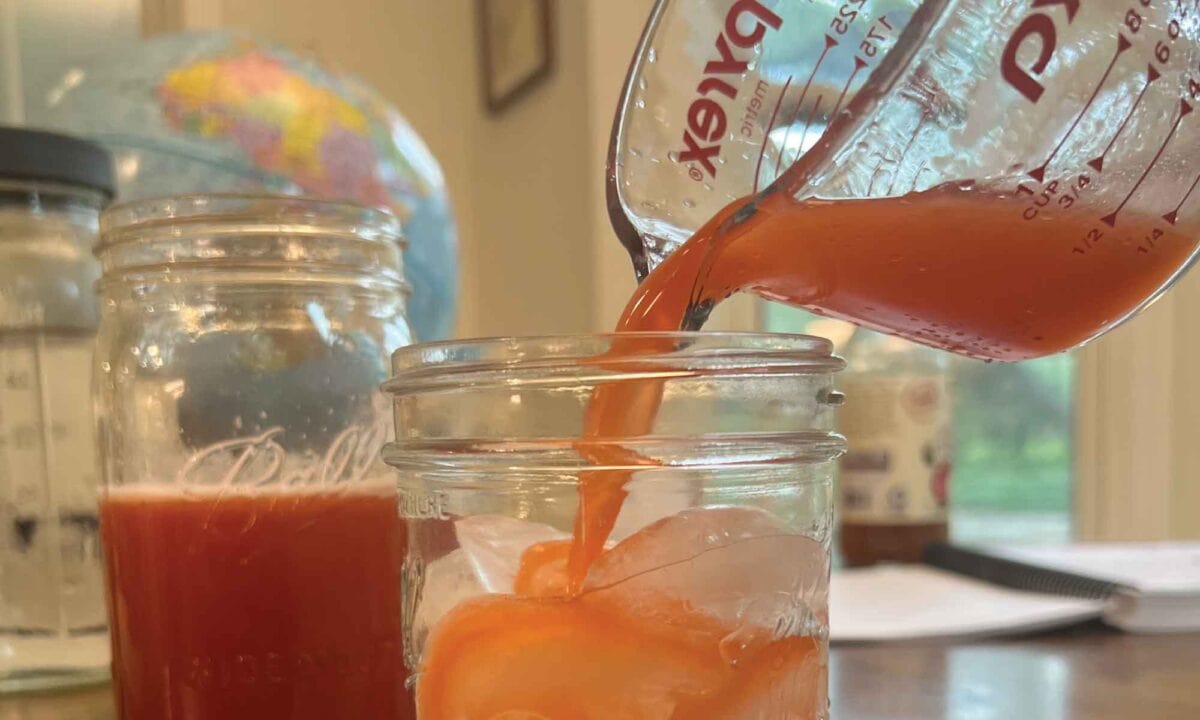
Shrubs were popular beverages starting in the 1600s in England and continuing through the 1800s in the American colonies and later in the United States. The use of vinegar and honey helps preserve fruit in the drink, which was especially important in the pre-refrigeration era when summer fruit was abundant but quick to spoil in the heat. And because they feature raw apple cider vinegar, these drinks are rich in probiotics.
One advantage of Part 1 of this curriculum is that none of the recipes require a stove or any kind of heat. This makes all three lessons ideal for the summer months because you can stay cool while making your beverage and while drinking it! They’re also ideal for getting started with preparing traditional foods—the recipes are simple, quick, and not intimidating for beginners.
Making Our Shrub
We began with the recipe portion of the K-4 lesson plan on page 19 of the curriculum. I read the text aloud to my children, making sure to pause after each question so they could respond. Then we gathered our ingredients and supplies: fruit, honey, apple cider vinegar, a bowl, a masher, two jars, a leakproof jar lid, a wooden spoon, and a strainer. We chose strawberries because they’re a family favorite and because they’re usually sweet and cheap during the summer months. We also made sure to use our favorite raw honey.
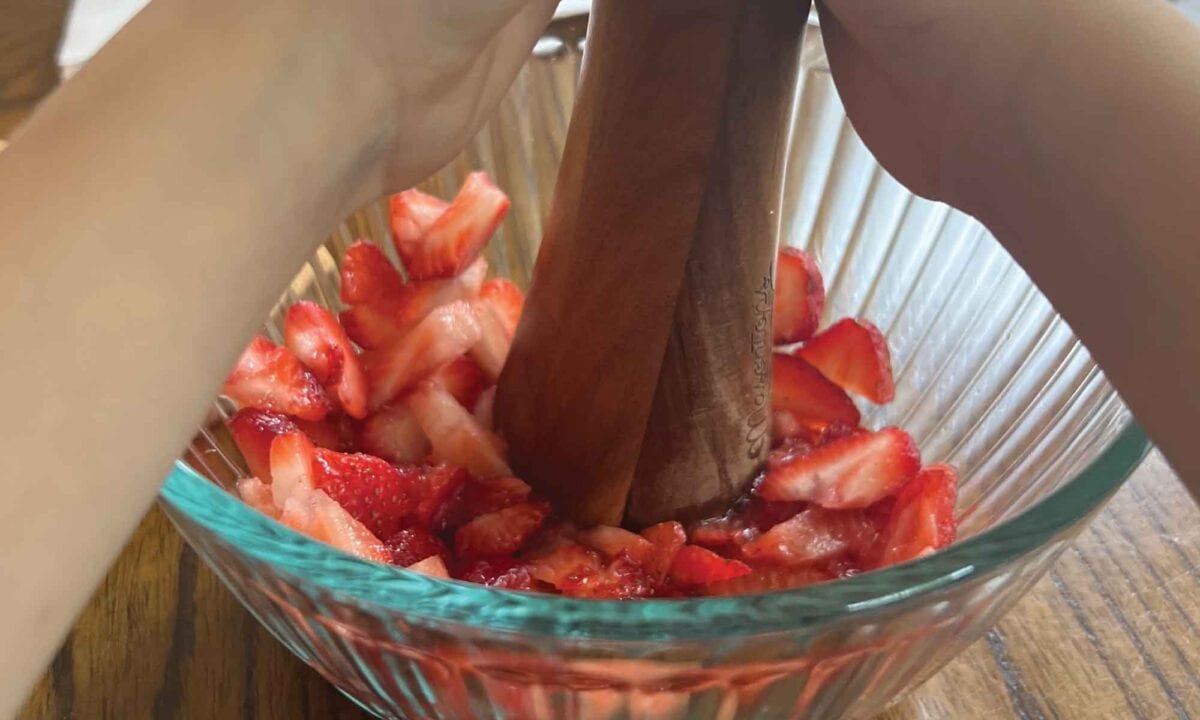
My children enjoyed measuring, mashing, and mixing. Mashing the fruit in the bowl was definitely the highlight of the recipe. They took turns using a wooden kraut pounder, but you can also use a potato masher or a fork. Once the berries were mashed, we transferred them to a quart-sized jar, then added the vinegar and honey. My kids took turns mixing with a wooden spoon before we tightly screwed on our jar lid and took turns shaking.
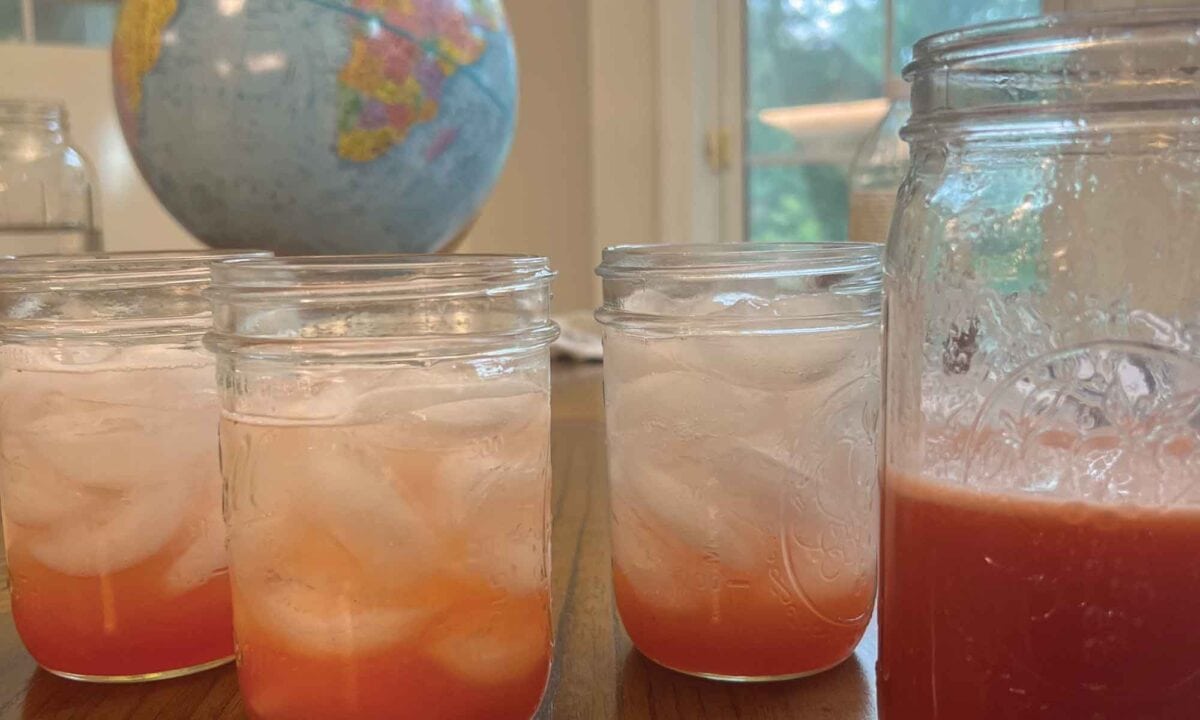
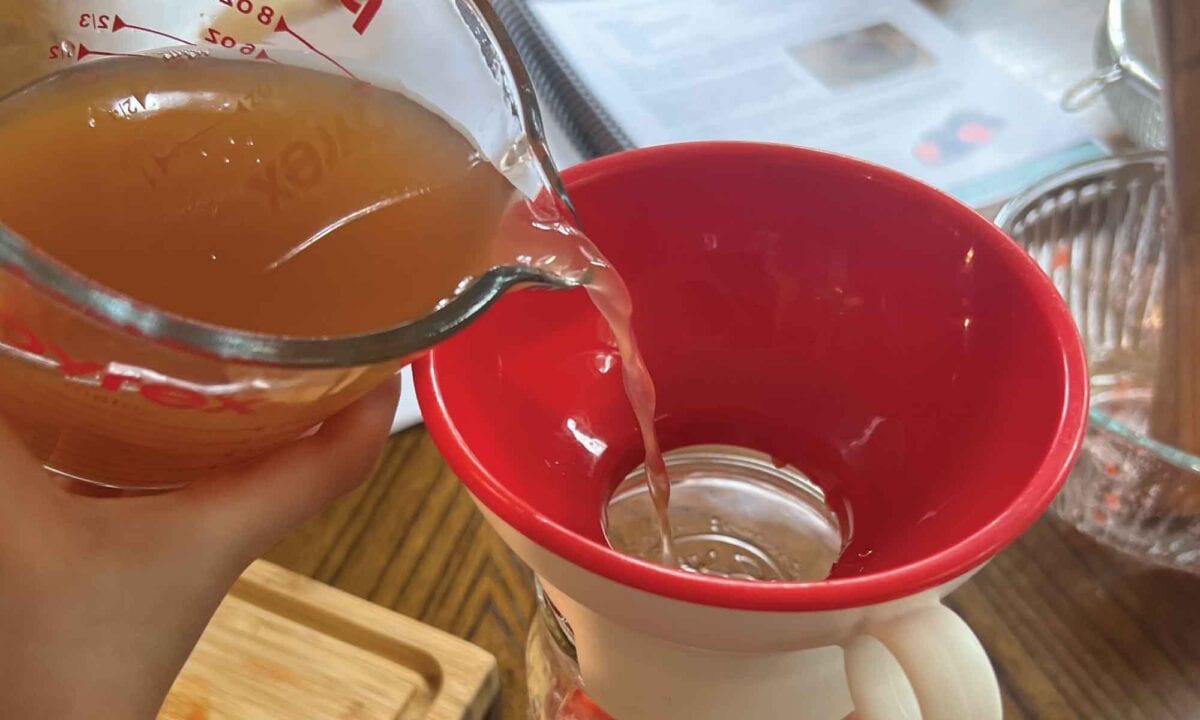
Once the mixture was thoroughly combined (our raw honey was thick, so we had to keep checking the bottom of the jar to make sure it was fully mixed), we strained it, pressing down on the pulp with the wooden spoon to release all the liquid. Our shrub syrup was ready! We filled glasses with ice, added 1/4 cup of the syrup to each glass, and filled the rest of the glasses with sparkling water. (You can also use non-carbonated water.)
Tasting the Strawberry Shrub
A welcome feature about this recipe is that it can be adjusted to each person’s tastes. My children found it a little strong, so they added a bit more water. (If we used taller glasses, they might not have needed to add the extra water.) Although they probably won’t be asking for drinking vinegar very often, they did enjoy their homemade shrub!
I noticed that the more sips they took, the more they liked it. I think it’s because the vinegar was a bit surprising in a sweet drink, but they slowly got used to it. When I asked them to describe the shrub, they came up with this list: sweet and sour, spicy, refreshing, strong, cold, and just plain sweet.
We had quite a bit of strawberry syrup left after mixing our shrub drinks. In the evening, I put some of it in a bowl and whisked in a little balsamic vinegar and olive oil to make a salad dressing! My children loved it on their lettuce—it was probably the sweetest vinaigrette they’ve ever had! Even after repurposing some of the shrub syrup as a salad dressing, we still have more in the fridge! It will keep for about a week.
K-4: Lesson Activities
While we sipped on our shrubs, we continued the lesson plan. We learned about how early American cooks used an open hearth instead of a stove, and I challenged all three kids to identify the different utensils and tools shown in the image on page 21 of the curriculum.
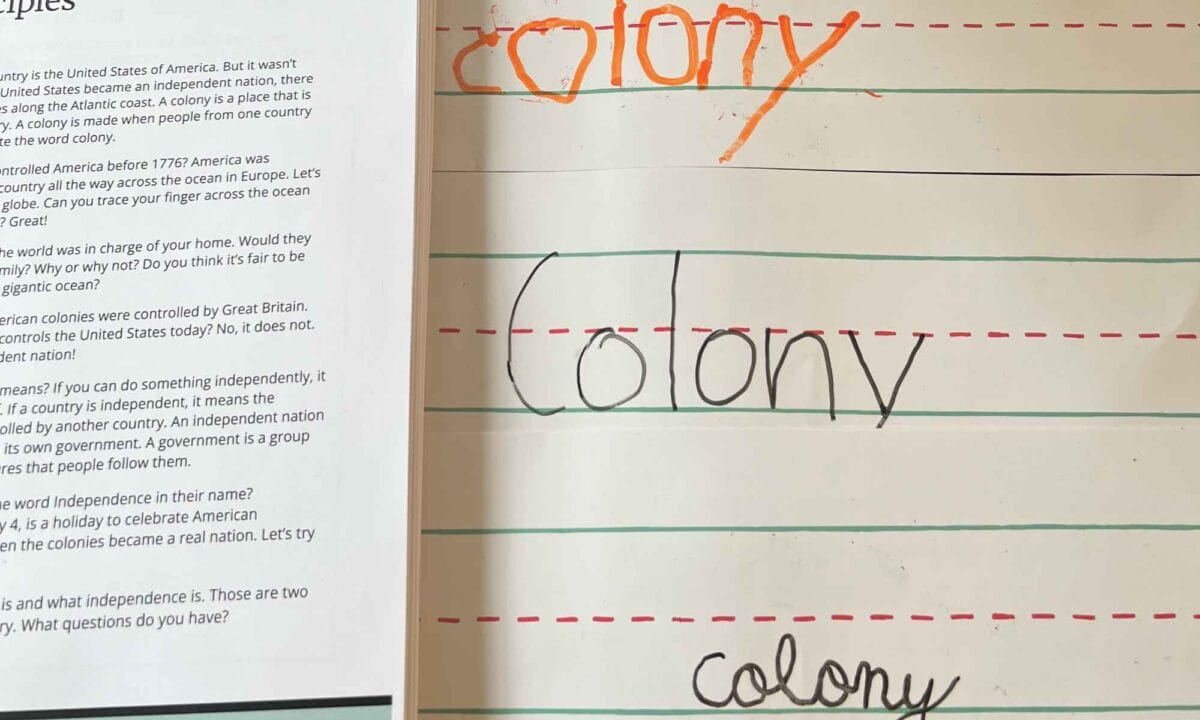
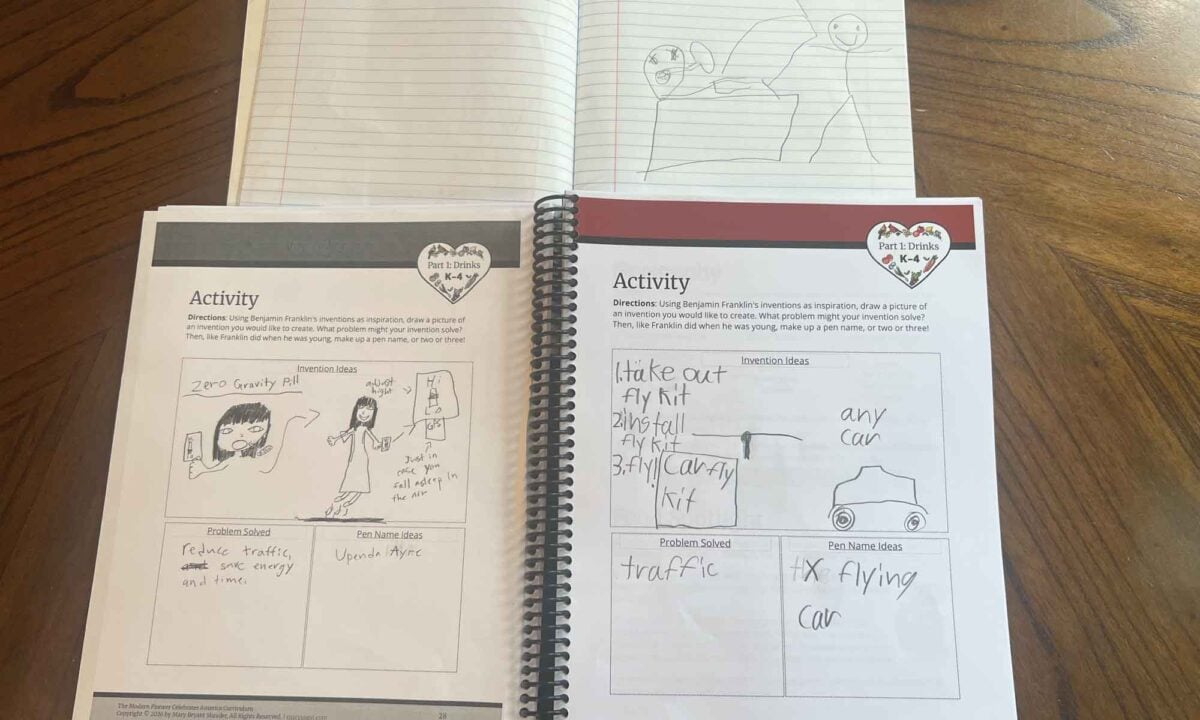
Next, we defined “colony” and discussed independence, also incorporating some handwriting practice. After identifying the nation’s “birthday,” the kids made birthday cards for the USA. We read about Benjamin Franklin and explored the meaning of his “Join or Die” illustration on page 25 of the curriculum before brainstorming original inventions and pen name ideas. My 11-year-old “invented” an anti-gravity pill, my 9-year-old a kit that turns any car into a helicopter, and my 5-year-old “medicine to help people.”
Learning About Primary Sources
We also went over what primary sources are and why they’re important for studying history. I wondered how easy this would be for my 5-year-old to grasp, so after my older children defined “primary source,” I had this dialogue with my youngest:
“If we wrote a book today about history, would that be a primary source?”
“No.”
“Why not?”
“Because it’s not old.”
More precisely, because it wasn’t written in the historical era being studied, but he was getting it! Primary sources are so important, and discussing them in an age-appropriate way is an ideal learning goal for even pre-K students. They don’t need to remember the word “primary” or the word “source.” They just need to understand that the best way to learn about history is to look at the things that were made or written during that time.
Learning Geography and More
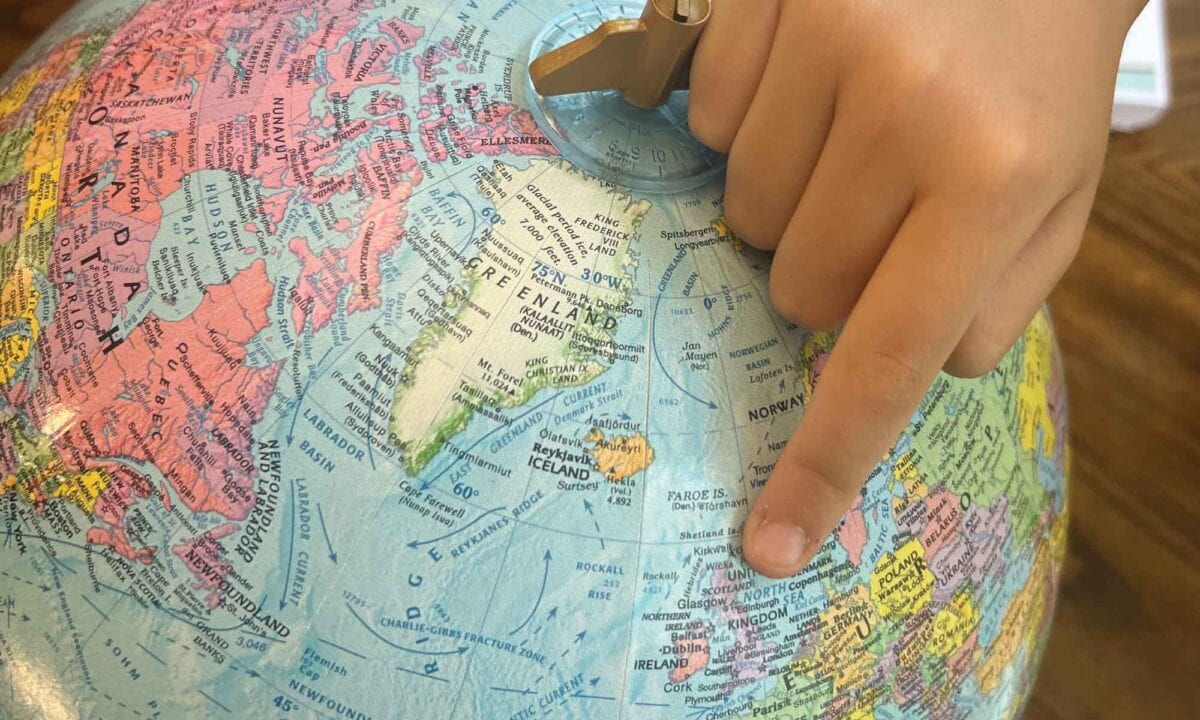
Continuing forward in the lesson plan, we learned E Pluribus Unum, the unofficial Latin motto of the US; we explored the three geographic regions of the 13 American colonies (New England, Middle Atlantic, and South); and we read about the benefits of honey and how colonists and early Americans used this amazing food.
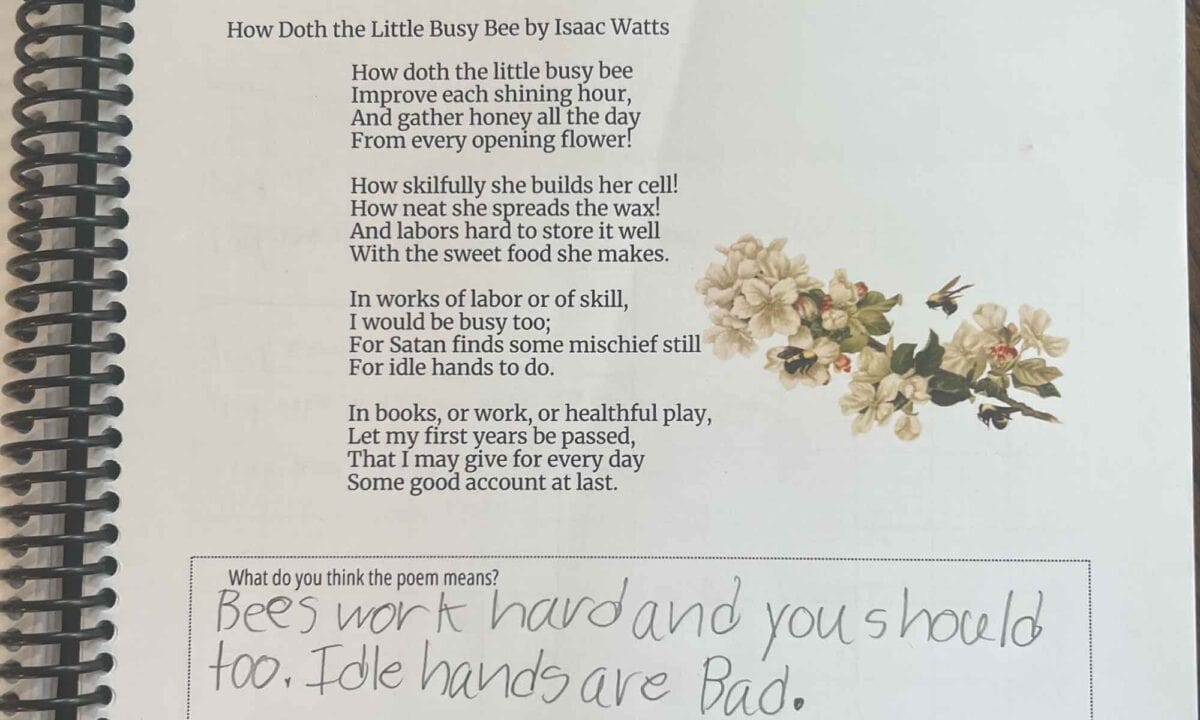
On page 30 of the curriculum, we also read and responded to the 1715 poem “How Doth the Little Busy Bee” by Isaac Watts, recalling Lewis Carroll’s version in Alice’s Adventures in Wonderland (“How Doth the Little Crocodile”). One idea for a literature extension would be to have students write their own version of this poem using a different animal.
Finally, my two older kids worked on the kitchen math activity at the end of the lesson. I illustrated the math concepts with my five-year-old by using measuring cups and having him recognize that 1 cup is double the size of 1/2 cup. The math activity pages throughout this curriculum have a lot of work space, accommodating students who may want or need to draw out the math problem.
Using Older Children as Teachers
Throughout the lesson, I invited my older children, who are very strong readers, to read most of the text. This kept them engaged and made them feel like the teacher. Together, we focused on helping my 5-year-old understand the content.
Having older kids help teach the younger ones is a beneficial way to both assess and strengthen their knowledge. For example, my two older kids know what a colony is and can define independence, but having to explain it to a pre-Kindergartener challenges them to communicate core concepts in simple language.
Middle School and High School Lessons
The day after completing all modules in the elementary lesson plan, my 11-year-old and I read through the middle school lesson. The middle school recipe is a Pineapple Mint Shrub, and my kids and I made this delicious drink when we did our lesson experiences for the Modern Pioneer Cookbook Curriculum. So, my daughter was already familiar with the beverage when she read about it in the 5-8 lesson on page 32 of The Modern Pioneer Celebrates America Curriculum.
However, she learned a lot from the new lesson! She found it fascinating that George Washington loved pineapple—but not enough to accept a gift of pineapples from a British loyalist during the Revolutionary War!
The middle school lesson also gave my daughter the opportunity to explore regional American cuisines, reflect on the principles of popular sovereignty and civic participation, examine a primary source (an 1898 blanket ballot), read about George Washington, and compare 19th-century westward pioneer trails. She also read about vinegar, reflected on the writing of Laura Ingalls Wilder, and scaled up a recipe using her math skills.
Diving Into Reading
My daughter is a voracious reader, and when I asked her if she wanted to read through the high school lesson on her own, she jumped at the opportunity. She read an excerpt from the Declaration of Independence, learned about Thomas Jefferson, reviewed the principle of the social contract, compared and contrasted rights and responsibilities, brainstormed volunteer ideas, learned some facts about ginger, and explored the historical geography of US state acquisition.
Finally, she read John Greenleaf Whittier’s 1846 poem “The Pumpkin.” The last activity in the high school lesson plan is a math problem asking students to calculate costs and decide on a price point for a hypothetical switchel stand, but we’re going to come back to that exercise. She worked hard on all three levels!
Tips and Takeaways
Overall, the four of us had a terrific time working on the first lessons of the Modern Pioneer Celebrates America Curriculum! Here are some final tips to review before you get started with your own students:
- It’s helpful to watch Mary’s recipe videos and read her recipe posts before getting started:
- If you have a canning funnel, use it, especially with elementary students! It will prevent waste and mess when kids add the mashed fruit to the jar. We also used it when we strained the mixture into the second jar.
- Another tip for elementary-age students is to avoid doing everything in one sitting. If you follow all the activities in order, children may be asked to create one drawing after another, and this might make them tired. It’s often better to give kids some space between these activities, either within the same day or the same week, depending on their level of skill and/or interest.
- If you have more than one child, you can easily print out extra copies of the activity pages that ask them to write or draw directly on the page. This way, each student has their own workspace. Alternatively, feel free to have your students use notebooks or blank paper for the activities, especially if you’re using the digital version of the curriculum.
- Finally, one of the best suggestions I can give is to preview the lesson before starting with your students. Although this curriculum is “open and go” (with the exception of ensuring you have the recipe ingredients), it’s best for the parent or teacher to know what to expect. This allows you to decide the best way to order the modules within your time constraints.
I hope you enjoy the lessons from Part 1 of this curriculum as much as we did! If you want to share your students’ work, be sure to take photos and tag @MarysNest on social media!