Chapter 10 of The Modern Pioneer Cookbook Curriculum is all about Good “Bug” Beverages! Students will learn how to make switchels, shrubs, and ginger “bugs”—delicious drinks that highlight the benefits of electrolytes, probiotics, and self-sufficiency in the kitchen.
Whether it’s the quick and simple Haymaker’s Switchel Punch for younger learners, the fruity Pineapple Mojito Shrub Mocktail for middle schoolers, or the more advanced Homemade Ginger “Bug” for high schoolers, these recipes provide hands-on opportunities to explore nutrition, fermentation, and the joy of crafting beverages from scratch. (This lesson experience includes five free activity downloads!)
Thanks for Your Support: This curriculum material is offered free for families, homeschoolers, co-ops, teachers, grandparents, and lifelong learners. If this resource helps your family and you would like to support the creation of future Mary’s Nest curriculum materials, consider becoming a Sweet Friend Supporter on Patreon.
Affiliates note: As an Amazon Associate I earn from qualifying purchases. My content may contain affiliate links to products and services. If you click through and make a purchase, I’ll receive a small commission. It does not affect the price you pay.
Table of Contents
About The Modern Pioneer Cookbook Curriculum Lesson Experience Series
Hi! My name is Jamie O’Hara, and I’m a homeschooling mom, curriculum writer, and former classroom teacher. I recently had the pleasure of helping Mary Bryant Shrader create The Modern Pioneer Cookbook Curriculum, which includes extensive lesson plans for grades K-12 to complement Mary’s bestselling book, The Modern Pioneer Cookbook.
- Get The Modern Pioneer Cookbook Curriculum (Free and over 250 pages!)
- Get The Modern Pioneer Cookbook
- Read The Modern Pioneer Cookbook Curriculum Lesson Experience Article Series
Now, I’m excited to embark on a journey of experiencing these lessons with my own children, ages 6 and 8 (and sometimes my 3-year-old, too). I’ll be facilitating a total of 14 lessons, one for each chapter in The Modern Pioneer Cookbook Curriculum. As we go through the curriculum, I’ll document our experience to share with all of you!
Getting Started with Good Bug Beverages
Chapter 10 of The Modern Pioneer Cookbook teaches us how to make our own “good bug” beverages. The table below summarizes the recipes, principles, and learning objectives for each lesson.
| Grade Band | Recipe | Traditional Kitchen Principles | Learning Goals (Students will…) |
| K-4 | Haymaker’s Switchel Punch | 1. Homemade food 2. Low-waste kitchens | ● Discuss the benefits of making beverages at home ● Define electrolytes ● Prepare switchel, following a recipe |
| 5-8 | Pineapple Mojito Shrub Mocktail | 3. Real, whole foods 4. Seasonal eating | ● Discuss the importance of using real-food ingredients in the beverages we drink ● List the benefits of probiotic-rich beverages ● Prepare a shrub beverage, following a recipe |
| 9-12 | Homemade Ginger “Bug” | 5. Maximizing nutritional value 6. Preservation for self-sufficiency | ● Discuss the importance of homemade probiotic beverages for maximizing nutritional value and working towards self-sufficiency ● Compare and contrast various probiotic beverages ● Prepare a ginger “bug,” following a recipe |
Although all three recipes for this chapter are for beverages, they do not all use the same process.
- The K-4 recipe is really quick and easy.
- The 5-8 recipe requires a little more prep work because it contains more ingredients that need to be chopped and mashed.
- The 9-12 recipe is the most complex because the fermentation process is involved. The high school recipe takes a total of 9 days.
Planning for Students of Different Ages
Students of different ages can work together on any of the Chapter 10 recipes.
- The K-4 lesson provides an introduction to electrolytes.
- The 5-8 lesson focuses on the benefits of probiotics.
- The 9-12 lesson reviews probiotic benefits and then compares four different “good bug” beverages that can be found in The Modern Pioneer Cookbook. This high school lesson will be too advanced for elementary students, but many middle schoolers will be ready for it.
As always, it’s a great idea to preview each lesson beforehand in order to plan for each unique student.

K-4 Lesson: Electrolytes
For this chapter, I structured the K-4 lesson so that the activity comes first. I started by asking my children about sports drinks and electrolytes. Depending on your students’ experience, I also recommend that you ask them about sports drinks. My children have never tried the artificially-colored and flavored bottled sports drinks, so our conversation was a bit out of order when compared to the lesson plan.
My children have heard of electrolytes, but they had no idea how to define or describe electrolytes. I asked my children what the word “electrolyte” sounds like, and they said, “electric.” I asked them if they thought it was a coincidence or if electrolytes actually have something to do with electricity. They guessed that it was not a coincidence and that electrolytes are somehow electric.
I shared the following two definitions and had my children copy them into their kitchen journals.
- Electrolytes: electrically charged minerals in your body that help you stay hydrated
- Hydrated: having enough water in your body
Key Points About Electrolytes
Then we went over some important points about electrolytes:
- Electrolytes are already in our bodies.
- Electrolytes are minerals that are good for our nutrition.
- Electrolytes are actually electric! Did you know that electricity is running through our bodies at all times?
- Electrolytes make sure that the cells in our body have the right balance of water.
- Did you know that more than half of your body is made of water?
- Staying hydrated is important for our health in general. It’s also essential when exercising, running around, or playing sports. That’s why sports drinks contain electrolytes.
- Electrolytes can also be found in real salt, as well as all kinds of different foods.
Electrolyte Activity Downloads
I created a printable download with these definitions and discussion points, and I also made a mini foldable booklet about electrolytes that may be more suitable for younger students. You can download both activities here:
- Download the Electrolytes Definition and Discussion Activity (K-4) (PDF file)
- Download the Electrolytes Foldable Booklet Activity (K-4) (PDF file) (Note: Review directions on pages 2-3, but only print page 1.)

Diving into Hydration
As we talked about the idea of hydration, my son asked a lot of questions about our bodies’ water content. Many illustrations for kids depict the human body filled about two-thirds with water, but that gives the impression that we’re empty containers and water is only present in parts of our bodies.
To clarify, I introduced the concept of cells and showed my children a short video about this topic. They learned that our bodies are made up of cells that are too small to be seen with the naked eye, and that each cell contains water. My son found this amazing! Digging into the subject of cells is certainly not necessary for this lesson, but be prepared for your students to ask questions about hydration and the water in our bodies.
- Example video: What are Cells? | Science For Kids (National Science Foundation News)
Finally, after making sure my children understood the concepts of hydration and electrolytes, I asked them to draw two pictures. First, they drew pictures of themselves feeling dehydrated. Then, they drew themselves feeling hydrated after drinking an electrolyte beverage.
Discussion: Homemade vs. Store-Bought Beverages
Once we finished the activity portion of the lesson plan, we shifted our focus. With my children’s newfound knowledge about electrolytes and hydration, we returned to the topic of sports drinks. With the understanding that sports drinks are beverages that contain electrolytes to support hydration, we thought about their nutritional value. I used these questions from the lesson plan to spark my kids’ thinking:
- Are the sports drinks sold at stores good for us? Why or why not?
- Why is it good to make things at home?
- Why is it good to know how foods and drinks are made?
- How many plastic sports drink bottles do you think get thrown away every year?
We talked about how commercially bottled sports drinks are usually loaded with sugar and chemicals that we want to avoid. However, we can still enjoy electrolyte-rich beverages, especially if we make our own at home.

Introducing Switchel as a Traditional Drink
At this point, I introduced the word “switchel” (and its fun variations, like “swizzle” and “switchy”). I explained that switchel is a traditional drink that has been made for hundreds of years. It’s made from apple cider vinegar, water, ginger, and honey (or another natural sweetener).
I asked my children to recall when they used apple cider vinegar in a recipe from The Modern Pioneer Cookbook. They remembered using it to make bone broth and ketchup. We went over the term probiotics again, reviewing our definition from the Chapter 5 lesson experience:
- Probiotics: the good bacteria that help us digest our food
We talked about how switchel is a homemade sports drink with electrolytes and a probiotic-rich beverage with extra health benefits.
To wrap up our discussion, I pointed to the title of the switchel recipe in The Modern Pioneer Cookbook. I asked my children what they think the word haymaker means and why the switchel would be called “Haymaker’s Switchel Punch.”
My kids identified that a haymaker is someone who makes hay, so we took a minute to discuss what it’s like working hard all day in the hot sun, farming and cutting hay. Imagining hard work helped to emphasize the importance of electrolytes and hydration.
5-8 Lesson: Focus on Probiotics
The middle and high school lessons don’t touch on electrolytes, but rather probiotics.
In the grades 5-8 lesson, students spend time evaluating different drinks based on their ingredients. Reflecting the theme of the middle school lessons, students are encouraged to prioritize real-food ingredients over artificial ones. They learn some techniques for reading and interpreting ingredient labels, and they’re invited to examine the ingredient lists for any bottled beverages they have at home.
As an alternative, I created a printable worksheet with ingredient lists for three different drinks and a checklist for evaluating them. This worksheet is useful if you don’t have any pre-bottled drinks in your kitchen, or if you’re teaching in a large group setting.
For their activity, middle school students play a probiotic-benefit matching game. You can create your own materials using index cards, or you can download the following printable version:
9-12 Lesson: Probiotic Drinks
High schoolers also discuss the benefits of probiotics, so if you have students in the two upper-grade bands, there is ample opportunity to mix and match from both lessons. In the grades 9-12 lesson, the benefits of probiotics are centered around the themes of self-sufficiency and maximizing the nutritional value of food.
For their activity portion, high schoolers complete a comparison chart that examines four different probiotic drinks: switchel, shrub, ginger bug drinks, and kvass. To make this activity easier, I put together a printable worksheet so that students don’t have to draw a chart in their notebooks.

Recipes: Switchel and Shrub
Haymaker’s Switchel Punch
If you’re planning to make a switchel, I can assure you that it’s the easiest recipe so far! It’s literally just mixing a few ingredients in a large jar and then serving over ice. No heat, no waiting, just mix and drink!
To get started, I had my children measure our ingredients:
- Ground ginger
- Sea salt
- Raw apple cider vinegar
- Raw honey
- Filtered water
First, they added ginger and salt to a half-gallon glass jar and mixed it with a small amount of water. Then, they added the vinegar and honey before filling the rest of the jar with water. They took turns stirring until everything was fully dissolved. (Tip: Make sure to give kids a spoon with a very long handle to prevent them from accidentally sticking their hands in the drink!)
My kids followed this recipe almost completely on their own, with very little involvement on my part. The recipe itself only has four steps, so I made my children responsible for following it independently. It was excellent practice for them and an empowering experience.
Pineapple Mojito Shrub Mocktail
Because the switchel was so fast and easy, and because my kids love fruit, we also made the Pineapple Mojito Shrub Mocktail. For this recipe, we needed:
- Cubed pineapple
- Fresh mint leaves
- Limes
- Honey
- Raw apple cider vinegar
- Filtered or sparkling water (We chose sparkling.)
We added the pineapple, mint leaves, and lime juice to a half-gallon jar. Using a kraut pounder, we took turns mashing the mixture to release and combine the juices. We added the honey and apple cider vinegar, shook well, and let the mixture sit for 30 minutes. Then we pressed it through a fine mesh strainer.
To serve, we filled a glass with ice, poured ¼ cup of pineapple mixture over it, and filled the glass with sparkling water.

Tasting: Switchel and Shrub
Haymaker’s Switchel Punch
When everything was mixed, we filled glasses with ice and poured our switchel. My children often disagree when it comes to taste preferences, but they both described the switchel as “delicious!” (My three-year-old also tasted it. He said, “At first, it’s yummy. Then, it’s ew-y.”)
When you first take a sip, you taste the honey and ginger. Then, the vinegar taste creeps in. It’s very mild, but if your students are sensitive to the taste of vinegar, it might take them some time to get used to it. My older children suggest not smelling the switchel before you take a sip; it may smell more vinegar-y than it tastes!
My daughter had the idea to try some with a little cinnamon sprinkled on top. Combined with the apple cider vinegar and ginger, she said this made the switchel taste like apple pie! If your students are worried about the vinegar taste, adding a bit of cinnamon may help them keep an open mind about switchel.
Pineapple Mojito Shrub Mocktail
Everyone agreed that the shrub mocktail had less of a vinegar taste than the switchel. My daughter preferred it to the switchel, and my son liked both drinks equally.
The second time I served it to my kids, I added some frozen pineapple to the ice to give it a little extra sweetness. You can also garnish the drink with a lime slice, pineapple slice, or mint sprig.
Personally, I loved the shrub because of how fresh it tastes. The pineapple, lime, and mint come together so nicely, and the vinegar is very subtle, if not totally unnoticeable. I also really liked it with the sparkling water. This drink could be a big hit at any summer event, from a casual barbecue to an elegant dinner party or wedding.
Final Thoughts
Using my experience facilitating this lesson, here are my ultimate takeaways for anyone getting ready for Chapter 10:
- Because the recipe for Haymaker’s Switchel Punch is so easy, consider making two different probiotic beverages and see which one you like best.
- Remember to check out the Interdisciplinary Extensions at the end of each lesson plan. Especially if you’re making switchel or ginger ale, you’ll likely have enough time to incorporate at least a few of those prompts or activities.
- If your students don’t like the taste of the apple cider vinegar in the switchel, try adding some extra water, sparkling water, or a sprinkle of cinnamon.
- Finally, I suggest watching Mary’s videos with your students before getting started!
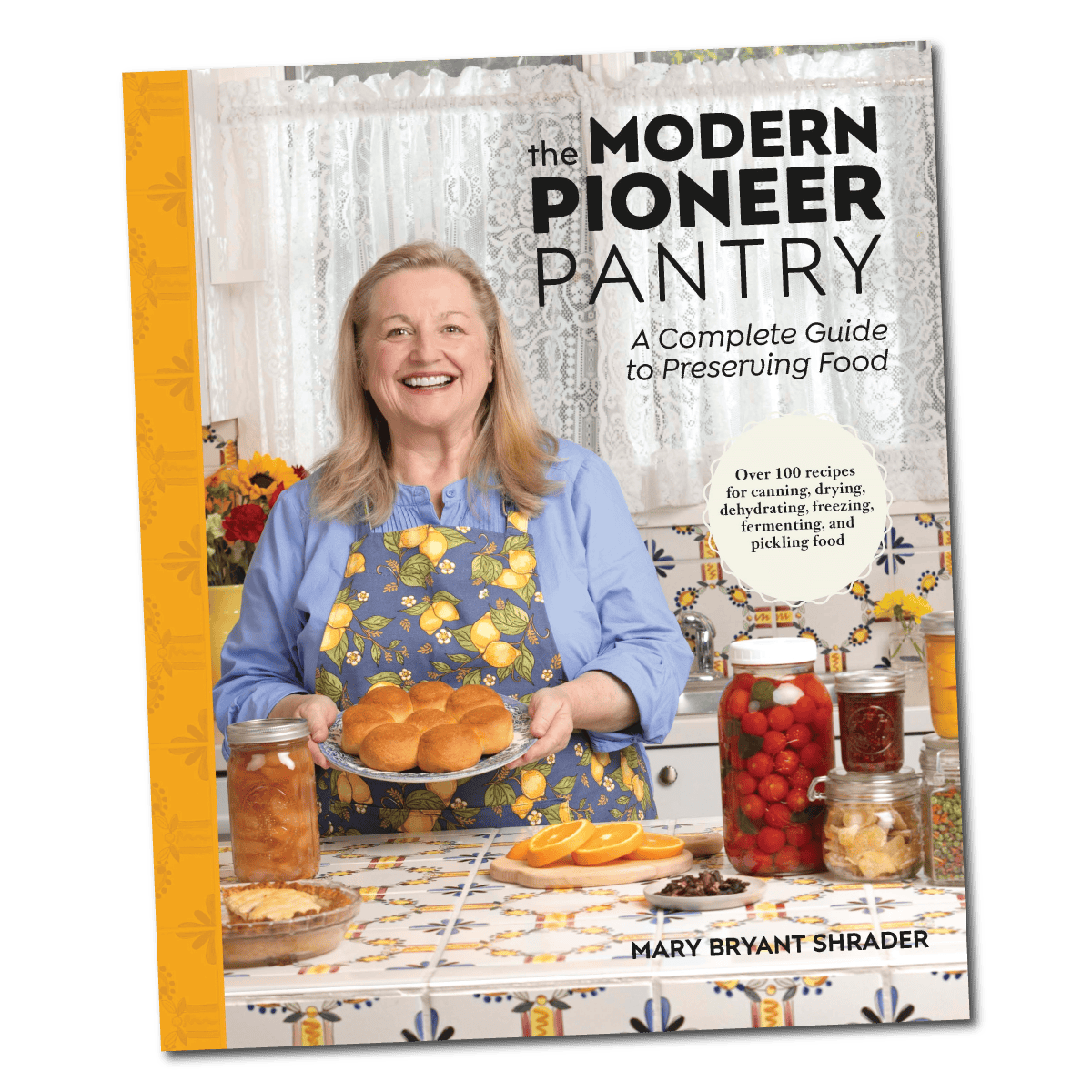
Order YOUR COPY Now!
The Modern Pioneer Pantry
Simple ingredients, timeless techniques, and a well-stocked pantry. Discover over 100 nourishing recipes to preserve food and turn pantry staples into delicious, homemade meals. Build a wholesome, traditional pantry—just like a modern pioneer!